

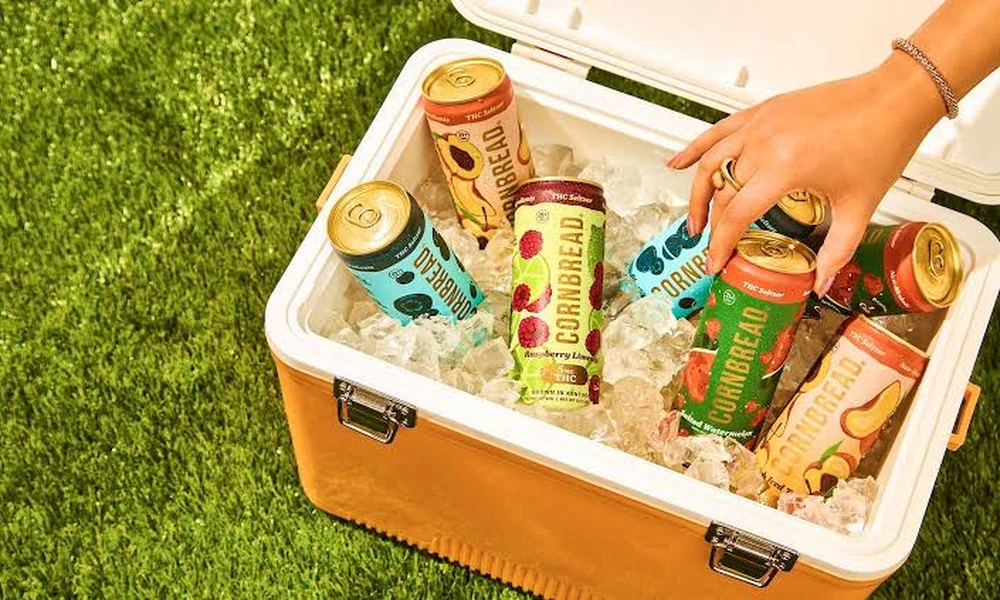
How does delivery differ?
Seltzers suspend nano-emulsified cannabinoid droplets inside carbonated water, while syrup carries a thicker, sugar-heavy base that slows movement toward digestive fluid. The structural difference between the two formats accounts for most of what separates them.
Carbonation moves gastric contents along somewhat faster, so seltzers commonly register within fifteen to thirty minutes. Anyone examining thc drinks across formats will find syrup arriving considerably later, often closer to an hour, since its denser consistency slows absorption at every stage.
- Seltzer format arrives pre-dosed inside a sealed, single-serving container.
- Syrup format requires separate measurement before mixing into any beverage.
- Mixing accuracy for syrup depends entirely on whoever pours a serving.
- Sealed seltzer servings leave less room for dosing error at the point of use.
- Syrup flexibility allows one bottle to supply several separate drinks over time.
Practicality follows directly from that measurement step, since a mismeasured pour shifts actual content away from anything printed on a label.
What changes across settings?
Format choice shapes how a beverage fits into a given setting more than flavour or branding does. Seltzers resemble ordinary drinking behaviour closely, since holding a can draws no particular attention inside a group.
Syrup asks for a separate vessel and a measuring step, both of which stand out more inside the shared company. Someone wanting something resembling sparkling water gravitates toward seltzer, while someone building a mixed drink at home often finds syrup better suited toward that flexibility.
Duration separates both formats as well. Seltzers taper across two to three hours typically, matching their faster arrival with a correspondingly shorter departure. Syrup’s slower onset frequently produces a longer overall arc, sometimes extending well past that window and increasing the chance that a later serving overlaps with sleep.
What should a comparison weigh?
Selecting between formats depends primarily on the intended setting and pacing rather than any inherent superiority carried by either one.
- A defined social window favours seltzer timing over syrup’s slower curve.
- A home setting is more suited to the use of syrup since it is easy to dose and administer from one bottle.
- Shorter evenings favor seltzer’s tighter overall duration.
- Extended evenings favour syrup’s longer arc, provided bedtime spacing gets planned around it.
Neither format outperforms the other universally, since each trades speed against flexibility in a different direction.
How should potency get verified?
Verified milligram content matters equally across both formats, regardless of which one a person leans toward. Batch-specific certificates confirm actual cannabinoid quantity, and a printed code should match whatever documentation accompanies a purchase.
Independent laboratory testing carries more standing than in-house verification for either seltzer or syrup, since separation from a manufacturer removes an obvious conflict of interest from any reported figure. Testing covering total THC alongside any supporting cannabinoids gives a fuller picture than a single potency number alone.
Choosing between seltzers and syrup comes down to setting, pacing, and verified dosing rather than to any built-in advantage held by one format. Reading batch documentation carefully remains the most reliable step before comparing either option further.
